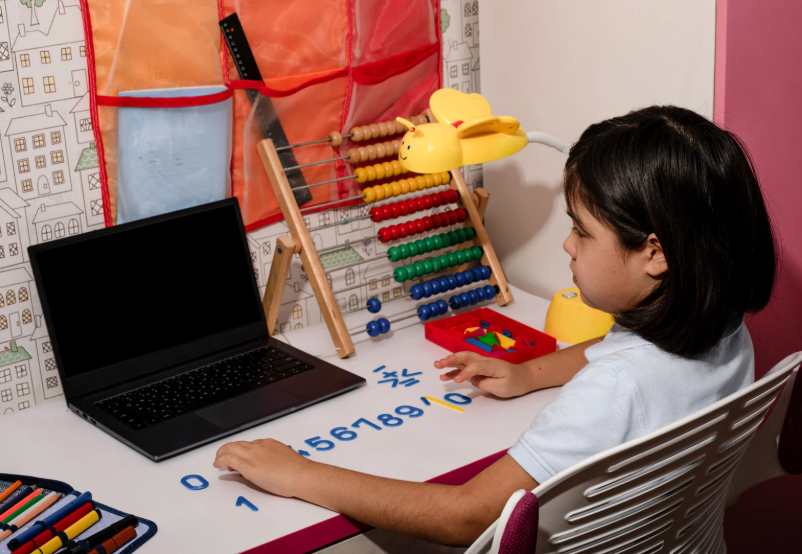
Is Abacus Learning Worth It?

The average cost of abacus classes across Singapore is $200–$300 per month. Group and online classes are generally more affordable, while private abacus class fees in Singapore can range from $300 to $600 per month. This cost impacts the family’s budget, so it is natural for parents to question the necessity of abacus classes and whether they are a worthwhile investment. 

To truly appreciate the abacus and whether the abacus class fees in Singapore are worth it, you first need to know what your child is gaining. 

  • Boosts math speed: The abacus trains students to mentally calculate math problems and perform calculations at a faster speed. This helps them complete math exams quickly, or at least within the required time. 
  • Improves cognitive skills: Abacus classes can help enhance your child’s cognitive skills. For example, children tend to have better memory, concentration, and attention spans. Some studies also show that abacus learners perform better in tasks that require critical thinking. They also have good problem-solving skills. 
  • Enhanced math confidence: As your child gets better at math, they become more confident in their ability to perform well in the subject. Over time, they will be more inclined to participate in competitions, which will expose them to life-changing opportunities. 
  • Participate in math competitions: Abacus classes help unlock a student’s potential. Abacus class fees may appear high, but the impact is greater. Once a child realises their capabilities, they will confidently participate in competitions, such as the math olympiad, which may give them a sense of direction. 

Given these benefits, is abacus learning worth it? Yes, it is, especially for children who start using abacus tools at an early age. They will have a solid math foundation from the get-go, and this will have long-term benefits as they progress in their academic journey. 

When Is Abacus Learning Not Worth It?

When considering abacus class fees in Singapore, it is essential to consider both the benefits and drawbacks. Here are some of the challenges of abacus classes.

  • It is based on basic math: Many parents don’t see the value of paying abacus class fees when all the kids do is learn basic math. When you limit the benefit to academics, it may not seem worthwhile, especially if your child is not struggling with math.
  • Time-consuming: Abacus training is repetitive and requires students to spend at least half an hour daily to gain the expected skills. Some students don’t respond well to repetitive tasks, so they are likey to lose interest and be less productive. You may not get good returns from abacus class fees in Singapore. 
  • Diminished returns on older children: Abacus classes are helpful to students at all levels. However, it is most beneficial for students in primary school (ages 5-12).  Older students may find abacus learning tedious or unnecessary, especially since their curriculum is more advanced. They are also more interested in algebra shortcuts. 
  • Hidden costs: Many student centres don’t provide parents with details beyond the abacus class fees. The abacus class fees in Singapore may be $200 per month, but additional undisclosed fees may apply, including registration, competition, exam, and abacus material fees. 

Abacus learning has its pros and cons, and parents should be aware of this when paying abacus class fees in Singapore. The benefits of abacus learning extend beyond math, as its impact is also evident in other subjects. For example, as students develop longer attention spans, teachers will notice the change in other subjects. This is one of the factors that make learning with an abacus worthwhile.

7 Popular Enrichment Centers in Singapore

In Singapore, parents are always on the lookout for quality enrichment centers. They aim to provide their children with opportunities for growth and development. With plenty of options available, it can be challenging to navigate the landscape and find the right fit for your child. To help you make an informed decision, let’s explore five popular enrichment centers in Singapore.

1. The Learning Lab

The Learning Lab is a renowned enrichment center in Singapore that offers a wide range of programs designed to enhance students’ academic skills and foster critical thinking. From English and Math to Science and Chinese, their comprehensive curriculum is delivered by experienced educators. Educators who are passionate about nurturing young minds. With small class sizes and personalized attention. Students receive tailored support to excel in their studies.

2. MindChamps

MindChamps is another leading enrichment center in Singapore. Their programs focus on developing children’s cognitive, social, and emotional skills. They incorporate a blend of academic and enrichment activities. Their emphasis is on creativity, critical thinking, and character development. MindChamps empowers students to become confident individuals. They make sure that their students are ready to face the challenges of the future.

3. Kumon

Kumon stands as a renowned name in Singapore. It is synonymous with academic excellence and personalized learning. With over six decades of history, Kumon has been a trailblazer in the field of supplementary education, offering programs designed to nurture students’ academic abilities and foster a love for learning. As a renowned enrichment centre in Singapore, Kumon continues to inspire and educate young minds.

At Kumon, the emphasis is on individualized learning and mastery of foundational skills in math and reading. Through a carefully structured curriculum and personalized study plans, Kumon helps students build a strong foundation of knowledge and develop essential skills that will serve them well throughout their academic journey.

4. Artary

With a focus on visual arts and design, their enrichment programs provide students with opportunities to explore different mediums, techniques, and styles. From drawing and painting to sculpture and mixed media, Artary encourages self-expression and experimentation while instilling a sense of pride and accomplishment in students’ artistic endeavors.

5. Heguru Education Centre

Heguru Education Centre specializes in brain development and early childhood education. It offers programs that stimulate children’s cognitive abilities and unlock their full potential. Through a combination of right-brain training, memory enhancement techniques, and critical thinking exercises. Heguru optimizes children’s learning capabilities and cultivates a lifelong love for learning. Their dynamic and engaging classes foster curiosity, creativity, and confidence in students. They prepare them for academic success and personal growth.

6. Genius League: Elevating Learning to New Heights

Nestled in the heart of Singapore, Genius League is renowned for its innovative approach to education. It is famous for elevating learning to new heights for students of all ages. With a focus on STEAM (Science, Technology, Engineering, Arts, and Mathematics) education. Genius League offers a wide range of programs designed to foster creativity, critical thinking, and problem-solving skills. From robotics and coding to creative arts and design thinking – it has all. Students are empowered to explore their interests and passions.

7. Music Maestro

Singapore’s premier music enrichment center – Music Maestro. It offers a range of programs designed to nurture students’ musical talents and appreciation for the arts. From piano and violin to voice and music theory. Students receive personalized instruction from accomplished musicians. Music Maestro cultivates a lifelong passion for music.

Conclusion

These popular enrichment centers in Singapore offer a diverse range of programs and approaches to education. They cater to the unique needs and interests of every child. By investing in your child’s education and enrichment, you’re laying the foundation for their future success and fulfillment.

So, why wait? Explore these renowned enrichment centers today and embark on a journey of discovery and growth with your child.

Crafting Connections: The Social Side of Art Classes

Have you ever thought about how art classes are more than just drawing and molding stuff? Let us explore a treasure map that leads us into the awesome world of art classes, where it’s not only about making art but also about making friends and creating memories. It’s like finding a secret door to a place where the magic isn’t only in the pictures we make but also in the friends we find and the stories we create together.

Making Friends on the Canvas

Whether you’re a pro or just starting, in art classes, everyone comes together because they love art. It’s like a big art club where each person adds something special to the group picture. From sharing paint tips to helping each other with tricky techniques, art classes create a friendly space where friendships naturally blossom.

Drawing Together, Creating Together

One of the coolest things about art classes is that you don’t only create your own art, you get to work on cool projects with others. It’s like a teamwork canvas where you share ideas and make something awesome together. Working side by side with fellow artists makes the whole art experience even more fun. You’re not just creating art – you’re creating shared memories that make the process enjoyable and memorable.

Fun Adventures and Shared Laughs

Imagine being in a room filled with the sound of brushes on canvases and lots of laughter. Isn’t it exciting? That’s what happens in art classes! It is about having a great time together. Art becomes an adventure, and the laughter shared makes the whole experience super enjoyable. Whether it’s a funny mistake or a successful masterpiece, every moment becomes a part of the shared art journey.

Art Beyond the Class: Hanging Out Together

Friends and colleagues are not just limited to art classes. They often get together outside of class for art shows, events, or just casual meetups. The connections made in art class can turn into friendships that go beyond the art studio. Grabbing coffee to discuss the latest art trends or visiting a gallery together, these moments outside of class strengthen the bonds formed during creative sessions.

Supportive Art Friends

In art classes, everyone understands the ups and downs of making art. It’s like having a bunch of friends who get what you’re going through. Whether you’re tackling a tricky technique or celebrating a success, your art friends are there to cheer you up. It’s a friendly and helpful community that boosts both your art skills and your spirits. The shared passion for art creates a supportive environment where everyone encourages each other’s artistic growth.

So, in the world of art classes, it’s not just limited to drawing or painting. It’s about drawing friends closer and painting memories that last forever. Joining an art class is not just about learning art; it’s about making connections that can stick around for a long, long time. Get ready for art, fun, and awesome friendships!

Colors of Calm: Finding Peace in Mindful Art Classes

We’ll explore how the simple act of creating art can bring a sense of peace and mindfulness, making the canvas a space for calmness. Step into a peaceful world where art becomes a soothing guide to composure. Welcome to colors of Calm, where we find peace in mindful art classes.

Embracing the Present – Art as Mindful Magic

Life can be busy, right? Mindful art classes are like a timeout for your mind. They help you focus on the now and the present. Imagine a canvas as a peaceful zone where you can paint or mold clay, and suddenly, you’re not thinking about tomorrow’s forecasts or yesterday’s memories. The brush or clay in your hands becomes a kind of magic wand, calming your thoughts and bringing you into the divine moment.

The Dance of Colors – Expressing Feelings with Art

Sometimes, it’s hard to say or express how you feel. Mindful art lets you speak without words. You pick the colors that feel right – maybe calming blues or energizing reds. The canvas becomes a dance of emotional tales. It’s like telling a story without talking. And guess what? There’s no right or wrong. It’s your story, your colors, your feelings.

Silencing the Inner Critic – Being Kind to Yourself

In mindful art, there’s no need for perfection. The focus isn’t on making a perfect picture; it’s about enjoying the whole process. Imagine telling your inner critic to take a break. It’s like saying, ‘Hey, I’m here to have fun and create, not to be perfect.’ Every stroke on the canvas is a step towards self-compassion – being kind to yourself and embracing the unique journey you’re on.

Mindful Observation – Noticing the Little Things

Mindful art isn’t just about drawing or painting; it’s about using all your senses. Feel the texture of the paint, smell the art supplies, and hear the brush on the canvas – it’s like a sensory adventure. By paying attention to these little things, you’re not just creating art; you’re fully experiencing the moment. And this mindfulness doesn’t stay on the canvas; it follows you into your everyday life.

Creating a Mindful Community – Friends in Silence

Mindful art is not a solo mission; it’s an adventure with friends. In the quiet studio, the shared silence becomes a powerful connection. You’re not talking, but you’re communicating through your art. It’s like having a silent chat with others who understand the language of colors and shapes. This shared journey creates a sense of community, reminding you that you’re not alone in your quest for peace.

In the world of colors of calm where you find Peace in mindful art classes, art transforms into a friend, guiding you to a peaceful place within. The canvas isn’t just a space for colors; it’s a doorway to serenity. So, are you ready to paint not just a picture but also the calmness within you? The canvas is eagerly waiting, and the awesome journey to peace is as simple as a brushstroke.

Maths Enrichment Programs in Singapore

Education in Singapore is already quite competitive. However, the tempo is even higher for students preparing for Primary School Leaving Examination (PSLE). While students have strengths and weaknesses, most agree that extensive math formulas are tough. It also negatively affects their overall academic performance.

The challenge with abstract concepts in maths is that it requires students to visualize, understand, and provide evidence on how they reached their answers. Unfortunately, the entire process is interconnected.

The answer will be wrong if a student fails to visualize or understand the concept. Likewise, an examiner will only give full marks if the child correctly illustrates how they solved the math problem.

Maths enrichment classes are important because they offer students additional lessons and personalized training. The maths enrichment programs are designed to mimic what is expected of the students when undertaking their maths PSLE examination.


Best Math Enrichment Programs in Singapore

Math enrichment programs are structured in two primary ways.

  • The child’s performance. The primary maths tuition appreciates that some students are naturally gifted to understand and excel in Maths. Similarly, some students struggle with maths concepts and calculations. Additionally, some students perform well in Math, but they have the potential to be even better.
  • Math curriculum for different levels. For example, there are math enrichment Singapore programs for early learners, elementary, middle, and high school.

All the primary maths enrichment classes use activities that children aged 4 – 12 enjoy. This way, the enrichment classes incorporate the MOE curriculum, but the teaching is less conventional. Children learn through play, puzzles, and games.

The Maths programs;

  • Set hurdles for students. This allows the maths tutors to assess a child’s progress from the moment they join the primary school maths tuition. It also helps the child appreciate that they can do well in maths, irrespective of their challenges.
  • Group students according to their ability. This reduces pressure on students who feel overwhelmed when learning with students who are better at maths. Fortunately, as students improve at maths, they move to an advanced group.
  • Give students a competitive advantage. Instead of focusing on memory, as is the case with traditional maths classes, children attending maths enrichment classes are equipped with problem-solving skills. They learn to use these skills to identify sets of related problems to help them solve a range of maths problems, including those they have not encountered.
  • Train students to use creative methods to solve math problems. For example, students use games to remember how to solve specific problems. This eliminates the risk of forgetting, as is the case when students memorize a formula.
  • Use physical and visual devices to get the attention of the students and get them to develop an interest in maths. Students may not always understand what they learn. When they participate in the problem-solving process, they will likely retain the information and excel in their maths.

Maths enrichment classes vary, but they share the same goal, helping students excel. There are several maths enrichment classes in Singapore available for students at different levels, so you get to choose one that will most likely influence your child’s interest in maths.

Math Enrichment vs. Math Tutoring

You have probably come across math enrichment, and math tutoring and are wondering if they are the same. If you enroll your child in one, do you get the same benefits, or should you opt for one over the other? Before you choose between primary math tuition and math enrichment, you should know what each entails.


Math Enrichment

In Singapore, math enrichment is a supplemental class for your child. It mainly targets students who excel in maths and need more engagement to stretch their math abilities beyond their current capacity.

Students who have grasped and mastered maths foundational skills and are ready for more complex concepts should enroll for math enrichment.


Math Tutoring

Primary math tuition is also a form of supplemental math lessons. However, math tuition helps students struggling with mathematical concepts and equations. Math tutors help students struggling with specific topics to improve and perform well in math. They also help prepare students for maths exams.

Although on paper, math tutoring and enrichment are different, many centers mix up the two, with some math enrichment classes offering tutoring services.

Both math enrichment and tutoring centers use creative means to develop students’ interest in math and overcome their challenges. However, math enrichment is usually more advanced.

Regarding cost, centers that offer math enrichmentin Singapore exclusively tend to be cheaper than maths tuition Singapore. However, since the lines are sometimes blurred, the rates are similar.


Should You Opt For Math Enrichment Or Math Tuition?

Since the definition and functions of math enrichment centers and primary maths tuition are interconnected, you can choose either, depending on a specific center.

For example, some math enrichment classes offer lessons at different levels. Students who require primary maths tuition are given the guidance they need with math problems that they consider difficult.

When they gain the necessary skills and confidence, the students move to the next level until they are ready for advanced math.

Some maths tuition centers help students within the confines of the MOE curriculum. Tutors look at the challenges students face and focus on these. They only proceed to other topics within the MOE curriculum when the students overcome their math challenges.

Both maths enrichment and math tutoring encourage critical thinking and problem-solving. However, math enrichment aims for advanced skills using complex math equations. It tests students’ learning abilities by testing how far they can stretch their problem-solving skills.

If your child has specific challenges and is solely aiming to perform well in school, then primary school maths tuition is all you need. However, if your child is gifted and finds mathematical formulas easy, you should consider math enrichment classes.

You’ll find professionals offering both math tuition and enrichment training. Math enrichment may be more competitive, but it is an avenue for students to share their skills, which often comes in handy in math competitions.

Some math enrichment Singapore classes only focus on students with advanced math skills. In contrast, others are ready to nurture students who have the potential to be great mathematicians. Before enrolling your child in centers offering supplemental math lessons, you need to know your child’s needs and if the center will meet them.

Signs Your Child Has Concentration Difficulties

How can you identify poor concentration in your child? Is school performance the only indicator of a child’s concentration and focus? Before discussing how to improve children’s concentration and focus, it is best to determine if your child has trouble concentrating. Some of the signs of poor concentration are easy to identify, while others are not as obvious. 

Displays of aggression, irritability, and moodiness

Forcing a child to do something when he is struggling to concentrate may be counterproductive. 

When this happens, the child is likely to rebel by being aggressive or irritable. Other children may shut down, and it will be almost impossible to get through to them by forcing the issue. Instead of assuming your child has behavioural difficulties, it is best to consider attention training for kids

Impulsive behaviour

A child’s impulsive actions are often labelled playful. However, while this may be true, it is not always the case. A child may struggle to sit still for five minutes because he cannot concentrate or focus. When he starts fidgeting a few minutes into an activity or lesson, chances are you need to seek help on how to improve concentration in kids. 

This impulsive behaviour can also be seen when the child is out playing. He may be playing with the swings, then immediately moves to the seesaw and then the trampoline. All within a few minutes of going to the playground. 

Is easily distracted 

This is one of the main telltale signs of poor concentration and focus in a child. Most children are easily distracted, especially when in an environment where many things are going on in their space. For example, if a child’s class faces the playground, a child will naturally be drawn to the children playing outside during a lesson. 

However, children struggling with concentration are easily distracted even when in a controlled environment. For example, a child may suddenly start looking at an item that is always in the room. 

For example, staring at a bookshelf during a lesson. There is no reason for this distraction, but the child’s mind wanders from the class because he has lost interest in the lesson. He is now just looking for something more exciting. 

Struggles to follow simple instructions

It can be frustrating when a child regularly fails to perform a task because he seems to have trouble following instructions. You could have asked a child to bring you a banana, only for him to bring you a pair of scissors. It is not that he did not hear you. He was not concentrating when you gave the instruction. Instead of getting upset, you should consider attention training for kids. 

Clumsiness

A clumsy child may be careless, but this could also be a sign of poor concentration. His clumsiness could be due to doing something while his attention is elsewhere, or he wasn’t listening when given instructions. The outcome when this happens is he ends up making a mess. 

Even as you attempt to find out how to improve children’s concentration and focus, you need to seek answers behind poor concentration. Sometimes, you may need to address the cause before taking undertaking attention training for kids. 

Poor sleep routines, a diet rich in sugar, excessive screen time, family trauma, disorders and some medications are responsible for poor concentration in children. Once you identify the root cause, the solution on how to improve concentration in kids will be easy to find. 


Why You Should Attend Child Development Workshops

Parenting is a learning journey. You discover things you would never have had you not become a parent. You have a child who expects you to make the right decisions regarding their lives. The responsibility can sometimes be overwhelming because sometimes it takes one misstep to traumatize a child for life. Child development workshops offer parents an avenue to understand parenting and everything it entails. 

Interact with other parents

When given responsibility at work, you have a team you can consult with when you need to make a decision. Unfortunately, most parents, even when unsure about a situation, have to make a decision. Often, one hopes that the choice they make is the best for their children. 

A parent workshop gives you a chance to look at a situation using a different lens. Hearing another parent’s approach to a situation similar to yours may give you a new lease of life because now the burden does not seem as heavy. 

Prepare for the future.

Someone with a newborn may not appreciate what parents with toddlers go through, just like a parent whose child is yet to join preschool may not be aware of ways to prepare for preschool. When you attend child development workshops, you may get a glimpse of your future and what you should do for an easier transition. 

Meet child development experts

Organizers of child development workshops often invite people with the right training and expertise. This is an opportunity to seek answers to some of the things you find troubling about your child. For example, if your child is on the autism spectrum, what should you do to help him cope? Is there anything you are unknowingly doing that is making life more difficult for your child?

This is an avenue to discuss your frustrations without feeling judged. All parents appreciate parenting hardships and are unlikely to be judgmental should you be going through parenting challenges. 

You get a support system.

It is nice to have a group of like-minded people with whom you can share your joys and struggles. When you attend a parent workshop, you might meet parents who share your interests. You will not just make new friends, but you will be increasing your child’s circles since you can take your children for play dates together. 

Your older children may also have much to learn from their peers. This is important if your child needs other children who will positively influence his personality and school work. 

Gain confidence in your parenting skills

Self-doubt is not uncommon for parents. Worries that you are doing something wrong or don’t have what it takes to raise a child may hold you back. Frequently attending workshops for parents will help you to become more confident in your role in your child’s life. 

When you have high self-esteem, your interactions with your child will naturally improve. The parenting journey will be more fulfilling, and you will no longer be scared of the challenges ahead. 

Child development workshops are great for introducing great and effective ways of discipline. Your interaction with experts and other parents will certainly make parenting easier and more exciting. 

Selection of playgroup for kids: Steps to follow

The early years of a childs age are quite essential. They should be utilized in a proper way so that children will develop to their maximum potential. Before the start of the formal educational process, kids need to be exposed with other platforms as well. Playgroup is one of those platforms that will prepare your child for the future. Apart from that, it is essential for the development of various early skills. Although it may seem that selecting a playgroup for kids is a difficult and challenging task. It can be if proper steps are not followed. But with a proper technique, the select of playgroup for kids is easy. Here are the steps that should be followed:

Step 1: Consider the basics:

Before getting involved in other major decisions, it is important to know the ways in which the playgroup will fit in your daily life. Shifting your child from home to a formal program comes with a transitional phase that has several considerations. All the important aspects need to be considered before the start of the process.

Some important questions parents should ask themselves include the importance of playgroup near the house, the importance of getting my child enrolled in a morning or evening shift and much more.

Step 2: Familiarize yourself with the important terms:

There are several terms that can be quite confusing for the parents who want to select a playgroup for kids. These terms include Montessori approach, Waldorf approach, child-centered approach and much more. Parents are unable to differentiate between these terms. As a result, they find themselves in a quite confusing situation. The understanding of these terms is related to the understanding of various educational approaches that are used for the teaching of kids.

After getting detailed knowledge about these terms, it will be easier to take a final decision.

Step 3: Do the research:

After the completion of the second step, there is a chance that you finally know what you want for your child. However, it must be noted here that this selection should also be based on the individual capabilities of your child. By focusing on the basics and important terms, it will be easier for you to narrow down your interest. Now, the next step is to make sure you are selecting the right playgroup for your child. This will be done with effective research only and for this purpose; you need to consider the following points:

Consult other parents: It is always best to take the advice of a person who has gone through the same phase. As they will be experienced, it will be easier for you to get maximum benefit from their experiments. The closest people that will help you in this regard are the parents of some other children. They will guide you about the ways through which the selection can be made effective.

Ask Google: There is almost nothing that is not answered on the internet. Apart from consulting other parents, do consider the internet. Here you will find a lot of information regarding this decision that will make it easy and effective.

Step 4: Visit the playgroups:

Now that you have everything in your mind, its time to implement your decision. For this purpose; you need to visit the playgroups you have considered the best for your child. By visiting those places, you will know the internal atmosphere and after careful observation, you will be able to take an effective decision for your child. Do not forget to look at the classes and meet the teachers Children playgroups and preschools are all fun .

Learning Abacus At An Early Age: Benefits Of Learning Abacus For Children

Abacus was the tool used for calculations long before calculators or even pen and paper came into existence.

Abacus is also the simplest learning device there is and an integral part of history of economics. The first documented use of

Abacus for calculation is in Europe, Russia and China, centuries ago. Today, while the concept of abacus remains unaffected, its build

quality is improved to contain beads and bamboo frame. In the recent times, abacus regained its popularity as a primary mental math strategies when adoption rates soared.

A word on abacus training

Abacus math, a term most often used in the context of learning using this tool, is the method of learning and understanding, using the principles

of abacus calculations. In an abacus, each groove or bar accommodates only 9 beads. It is designed so because when number 10 is reached, the next groove

or bar is moved. The designation thus becomes first bar to represent the units and second, the tens place. Thus, the representation of 12 in an abacus

would be 2 beads in the first bar, to denote the units place, and 1 in the next to denote the 10s. Abacus training classes teach the concept of regrouping

and performing the essential functions. In general, abacus is read from the left to the right.

Addition is performed using the complement method according to the instructions given by the teacher. Subtraction, on the other hand, is performed by

arranging beads for the minuend first, followed by the process of subtraction from lower/ or upper decks. The bead number which results, is the final answer.

Types of Abacus

For Multiplication, a modified abacus called the Lee abacus is used. Japanese have a variation called the soroban technique. The Chinese version is denoted

as the suan pan. The type of training your child receives will depend on the coaching classes. All types are equally effective.

Benefits of learning abacus for children

” All studies conducted to learn the significance of abacus have a common conclusion: abacus sharpens the brains and makes it proficient

” Like any muscle in the human body, the brain strengthens only through mental exercises. Abacus is a fun mental exercise to sharpen the brain.

Teachers have observed that students who are good at math readily grasp other subjects as well.

” Mathematics is all about accuracy and speed. is the application of various tools in order to reach the final solution.

Simple methods are often the most accurate and abacus fits the description.

” Abacus is not just a tool for math calculations; it also relies on perfecting the hand eye coordination according to the given problem. Simultaneous

use of hands in sync with the math problem helps in the activation of the entire brain.

” When a child trained in abacus solves a problem mentally, it becomes a significant confidence boost. Confidence starts to show in other aspects of

the child s behavior, as well, with time.

” Children who are trained to solve math using abacus, love the subject. It goes without saying that those who are untrained dread it. Abacus learning

is not restricted to addition, division, subtraction and multiplication of whole numbers; learning the basic concepts improves understanding of complicated

concepts like fractions, decimals and integers.

In a nutshell, children benefit immensely learning abacus techniques which they can use during math maths class. Training in abacus not only helps a child to overcome the fear of math, it builds self-confidence

and fine-tunes the positive power of visualization. Benefits of abacus are also reflected in easier retention of calendar memory, improved listening and writing.